
SILK-SCREEN PRINTING:
APPLICATIONS & TECHNIQUES
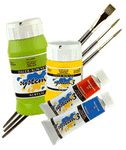
Liquitex Medium Viscosity Concentrated Artist Colors and High Viscosity Artist Colors offer artists a non-toxic approach for silk-screen techniques.
Medium Viscosity Concentrated Artist Color
- Consistency of extra heavy cream. Can be squeezed or poured from container.
- Easier to silk-screen through tight mesh screens.
- Dries quickly on absorbent surfaces, such as paper.
- May spread or "bleed" into absorbent surfaces, such as paper.
High Viscosity Artist Color
- Heavy body consistency.
- Less likely to spread or "bleed" when screen printing onto fabric.
- Generally prints more opaque because of thicker paint application.
- May clog in tight mesh screen.
Extending Drying Time
- Mix up to 25% Liquitex Slow-Dri Fluid Retarder with Medium Viscosity Concentrated Artist Color to slow drying time 50% and allow for better transfer of paint to paper during printing, without significantly affecting opacity.
- Mix up to 25% Liquitex Slow-Dri Gel Retarder with High Viscosity Artist Color to slow drying time 50% and allow for better transfer of paint to paper during printing, without significantly affecting opacity.
- Mix Liquitex Slow-Dri Fluid and Gel Retarder to aftain intermediate consistency.
Helpful Hints During Printing
- Prepare all paint necessary for printing before beginning.
- Work quickly. Do not stop during printing.
- Pre-wet screen with 1 part Liquitex Slow-Dri Fluid Retarder and 1 part water.
- To prevent paint from drying on screen during printing, periodically spray screen during printing with 1 part Liquitex Slow-Dri Fluid Retarder and 1 part water. Too much spraying may cause paint to spread ("bleed") on paper.
- For spot cleaning during silk-screen printing, remove paint from screen with a damp cloth as soon as screen clogs.
- To clean major paint clogs on screen, stop printing immediately and clean screen with warm water and non-abrasive sponge or cloth. Blot with paper towel and continue printing.
Liquitex Mediums as Permanent Silk-screen
- Blockouts
- They are resistant to oil based screen inks and solvents.
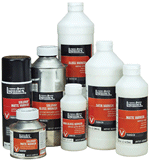
- For detail blackouts: Use Gloss Medium & Varnish or Matte Medium.
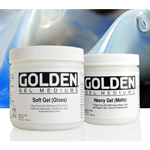
- For large area and expressive blackouts: Use Gloss Gel Medium, Matte Gel Medium or Gloss Heavy Gel Medium.
Stamping, Stenciling, Block Printing Refer to Part 2: Application & Techniques: Fabric