

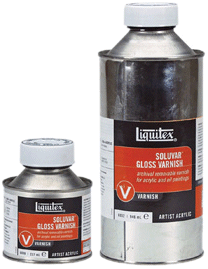
Home » Liquitex Soluvar Gloss Picture Varnish - Size: 8 oz.
Attributes
- Low viscosity, very fluid.
- Apply as a final varnish over dry acrylic or dry oil paint.
- Increases the depth and intensity of color.
- Also available in Matte which may be intermixed for a variety of sheens.
- Permanent, removable, final varnish for acrylic and oil paintings that protects painting surface and allows for removal of surface dirt, without damaging painting underneath. Once surface is clean, a new coat of Soluvar may be reapplied to surface.
- Thin with mineral spirits or turpentine. Do not use Odorless Mineral Spirits.
- Dries to a clear, non-tacky, water resistant, hard film that is resistant to retention of dirt and prevents dirt and pollutants from contacting paint surface.
- Self-leveling. Will not hold brush strokes.
- Flexible. Will not crack as surface expands and contracts during temperature and humidity changes.
- Resists discoloring (non-yellowing, non-fogging) due to humidity, heat and ultraviolet light.
- Protects painting against harsh elements.
- For interior and exterior use.
Application
- Apply as a final varnish over dry acrylic or oil paint.
- Good ventilation is required.
- Application may be done by brush or spray. Generally a sprayed application will be thinner, smoother and more even. Rolling or sponging application is not recommended.
- Painting surface and environment must be clean, dry and dust free. Allow oil paint to dry for 6 months to one year and acrylic paint for a minimum of 72 hours. Thickness of application will determine exact length of time.
- If an oil painting is not dry before it is sealed with a varnish, the result may be long-term problems such as cracking or blistering. Varnish may become non-removable if applied over a painting that has not completely dried and cured.
- Intermix Gloss and Matte Soluvar Varnish for a variety of sheens. Soluvar Matte Varnish contains matting agents that settle during storage. Gently stir with brush handle or dowel until completely re-dissolved. Do not shake.
- Apply 1-2 layers of Soluvar Varnish. Let each layer dry 24 hours between coats.
Over Acrylic Paint
- Allow acrylic paintings to dry for a minimum of 72 hours or longer if paint is very thick.
- Apply 1-2 coats of Gloss Varnish as an isolation barrier. The barrier coat physically separates the acrylic painting from the Soluvar Varnish and seals the surface. This aids in a more even application of Soluvar Varnish and protects the painting if the Soluvar Varnish needs to be removed. Allow to dry for 3 days.
- To insure proper adhesion, surface must be cleaned with lint free rag lightly dampened with mineral spirits.
- Apply 1-2 thin layers of Soluvar Varnish. Let each layer dry 24 hours between coats.
Brush and Paint Pad Application
- Use a wide, soft hair brush or paint pad (vacuum pad prior to use to remove lint). Size of area to be varnished will determine the size of the applicator. The smaller the surface area, the narrower the brush. Generally, a 1-4" flat brush is used.
- Apply varnish in 1-3 thin coats, rather than 1 thick coat. A thick coat will take longer to dry, may dry cloudy, may drip or sag during application and has a greater chance of showing brush strokes when dry.
- Horizontal surface application is best with less chance of varnish running. After varnishing, the surface should be shielded with a protective "tent". This will prevent any dust or airborne particles from settling into varnish as it dries.
- Apply varnish in slightly overlapping pattern that covers entire artwork. Apply in horizontal and vertical brush strokes, so that entire area is evenly coated.
- Do not rework areas you might miss, as the brush could pick up partially dried varnish and cause clouding. If areas are missed, wait until the varnish is dry and apply another coat.
Spray Application
- Most even application method.
- Use for textured surfaces (thick impasto,
thick textures), where brush application may result in foaming and fragile
surfaces (watercolor, tempera, graphite,
pastel, gouache), where brush application may disrupt drawing or painted
surface.
Select air pressure (PSI) depending on air gun used and viscosity of varnish. Greater PSI permits thicker varnish to be sprayed, but may affect fragile surfaces.
- 2-3 light even coats are better than 1 thick coat.
- Spray a continuous film by moving the spray gun in a smooth motion from one side of the painting to the other. First coat horizontal, second coat, third coat horizontal, etc.
- During spray application maintain same distance across the surface of the artwork. Move your body as well as your arm to avoid "arching" motion and uneven application.
- Good ventilation and a carbon dual filter mask are important.
Thinning
- Thinning increases penetration and can make it easier to apply varnish.
- Over thinning may result in weak varnish film, poor adhesion, running and soaking into substrate.
- Thin with up to 25% mineral spirits or turpentine. Do not use Odorless Mineral Spirits.
Removal
- Remove varnish in clean, well-ventilated area.
- Wear a dual filter respirator (NIOSH approved) and neoprene gloves. Dampen a small piece of lint free, soft, white cloth with mineral spirits (not "odorless") or turpentine - nothing stronger. Do not use ketones or paint removers.
- Work horizontally. Apply mineral spirits generously and allow it to lay on surface for 15-30 minutes. Check periodically. Longer time may be necessary, depending upon age of artwork and strength of mineral spirits. If varnish is not dissolving or dissolving slowly, use a higher strength mineral spirits or turpentine (cover with plastic to slow down evaporation of mineral spirits). Stronger mineral spirits are not labeled as such, but have a stronger odor.
- Rub cloth gently over a small area 1-2 square inches until varnish starts to dissolve.
- Using a clean cloth and clean solvent, rub the area again to remove residue. Repeat this procedure for the entire area to be cleaned. If any paint color shows on the cloth, stop immediately and allow the surface to dry.
- Allow painting to dry before reapplying a fresh coat of Soluvar Final Picture Varnish.

 In Stock
List Price: $30.49
Rex Price:
$24.39
Save 20%!



Join the Rex Art mailing list
Share:

- 800-REX-ART2
- (800-739-2782)
- fax: 305-445-1412
- service@rexart.com
- 5806 Commerce Lane
- South Miami, FL 33143
JOIN OUR MAILING LIST
Get our specials, coupons and exclusive deals!
- Green art supply product
- Drop Ship - Item is shipped from manufacturer
- Oversized - Additional shipping may apply
- Item Ships via Truck - Additional shipping will apply
*Free Shipping Offer valid for single package non-oversized shipments over $100.00 (after all applicable coupons have been applied) and under 20 lbs. within the 48 contiguous United States only. All other areas must pay shipping and handling charges. Exclusions apply. Orders for stretcher bars, cradled wood panels, stretched canvas, flammable items, closeout or discontinued merchandise cannot qualify for our free shipping promotion. We reserve the right to ship via the carrier of our choice.

Copyright © 1997 - 2023 by Rex Art Co. All rights reserved. Prices shown are in U.S. Dollars. Prices are subject to change.